Marshall | Marshall, MN
Knobelsdorff
Specialty Contractor > Specialty Construction - Industrial > Other Specialty Construction: Industrial
Overview
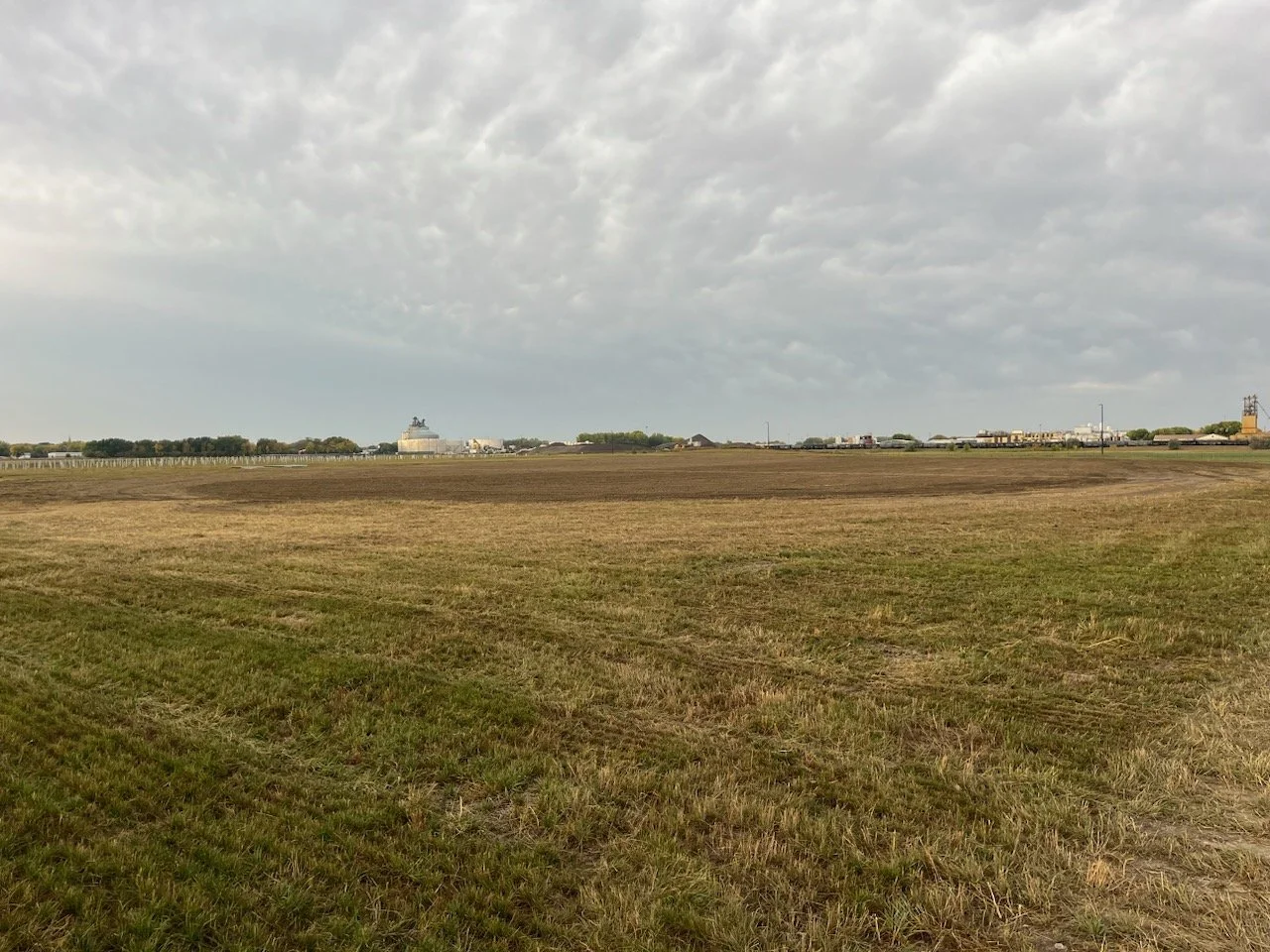
US Solar is a Minneapolis-based developer, owner, and operator of solar and energy storage projects. They focus on making renewable energy more accessible through utility-scale sites, community solar programs, and innovative customer offerings like Sunscriptions. When US Solar prepared to deliver its first utility-scale solar facility paired with an AC-coupled Battery Energy Storage System (BESS) in Marshall, Minnesota, they needed an EPC partner who could manage both scopes seamlessly.
The project was critical. Missouri River Energy Services (MRES), the long-term power purchaser, required a site that would reliably generate and store energy, proving the value of combining solar and storage at scale. For US Solar, success meant not only delivering a functional site but also establishing a model for future integrated renewable projects.
Situation
While US Solar had experience delivering large-scale solar facilities, integrating an AC-coupled BESS was new territory. The project required precise coordination between solar and storage systems, strict adherence to safety standards, and a condensed construction schedule to meet operational deadlines. Multiple stakeholders—including the owner, technology provider Eneon, civil contractors, and the utility—needed to work in sync to avoid delays.
US Solar’s priority was to find a single-source EPC who could self-perform both electrical scopes, manage civil coordination, and ensure accountability throughout design, installation, integration, and commissioning.
Planning and Design
Knobelsdorff assembled a cross-divisional team from its Energy and Power Services divisions to deliver the project from engineering review through final commissioning. KE collaborated with US Solar and Eneon early in the design process to verify system compatibility, define integration points, and sequence work so both solar and storage elements could progress without bottlenecks.
Key planning activities included:
• Reviewing and refining electrical and civil drawings for constructability.
• Coordinating construction access, staging, and sequencing for both scopes.
• Identifying and ordering long-lead materials early to protect the schedule.
• Creating a phased construction plan that tied the solar and BESS schedules together.
Procurement and Prefabrication
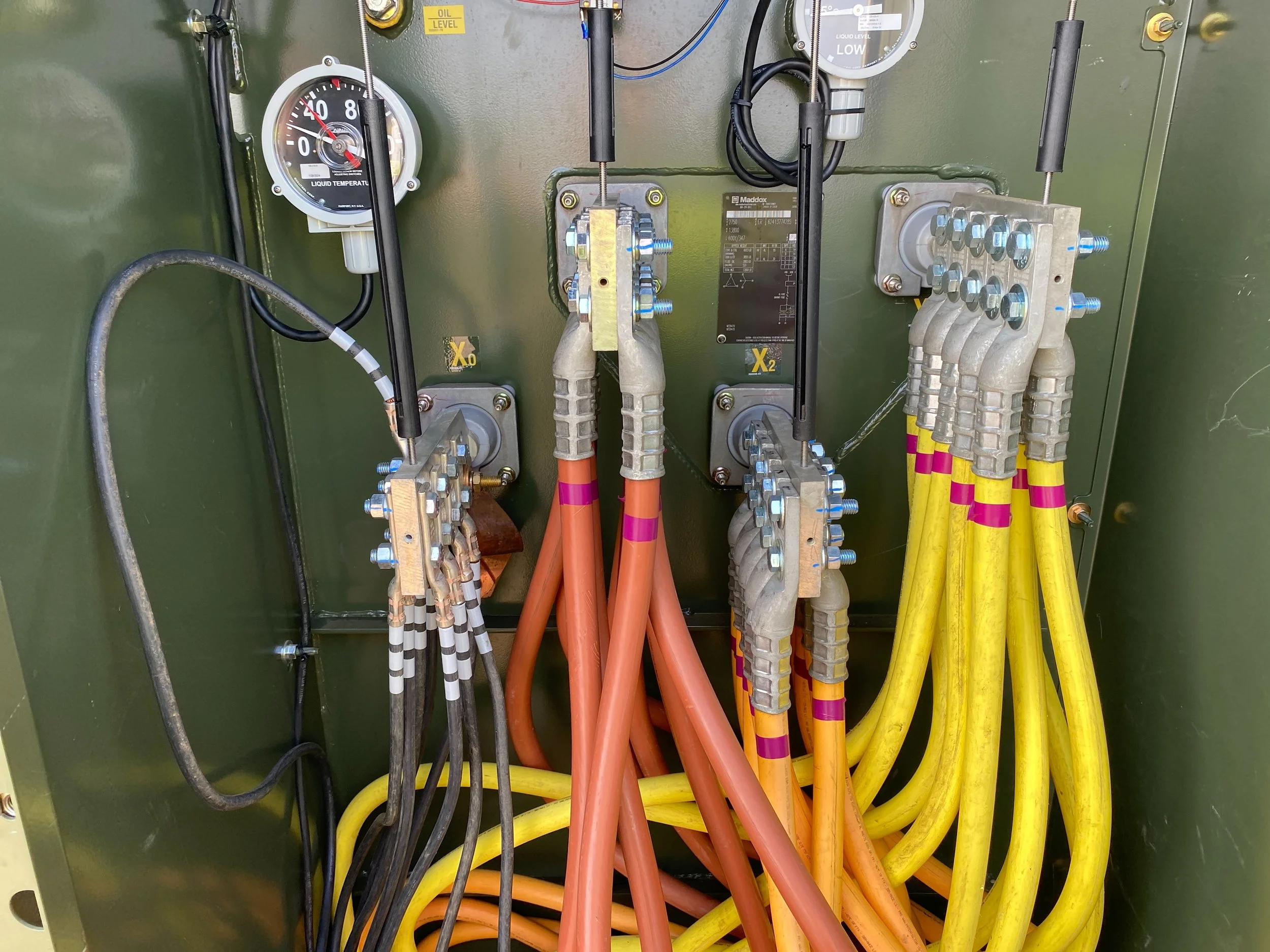
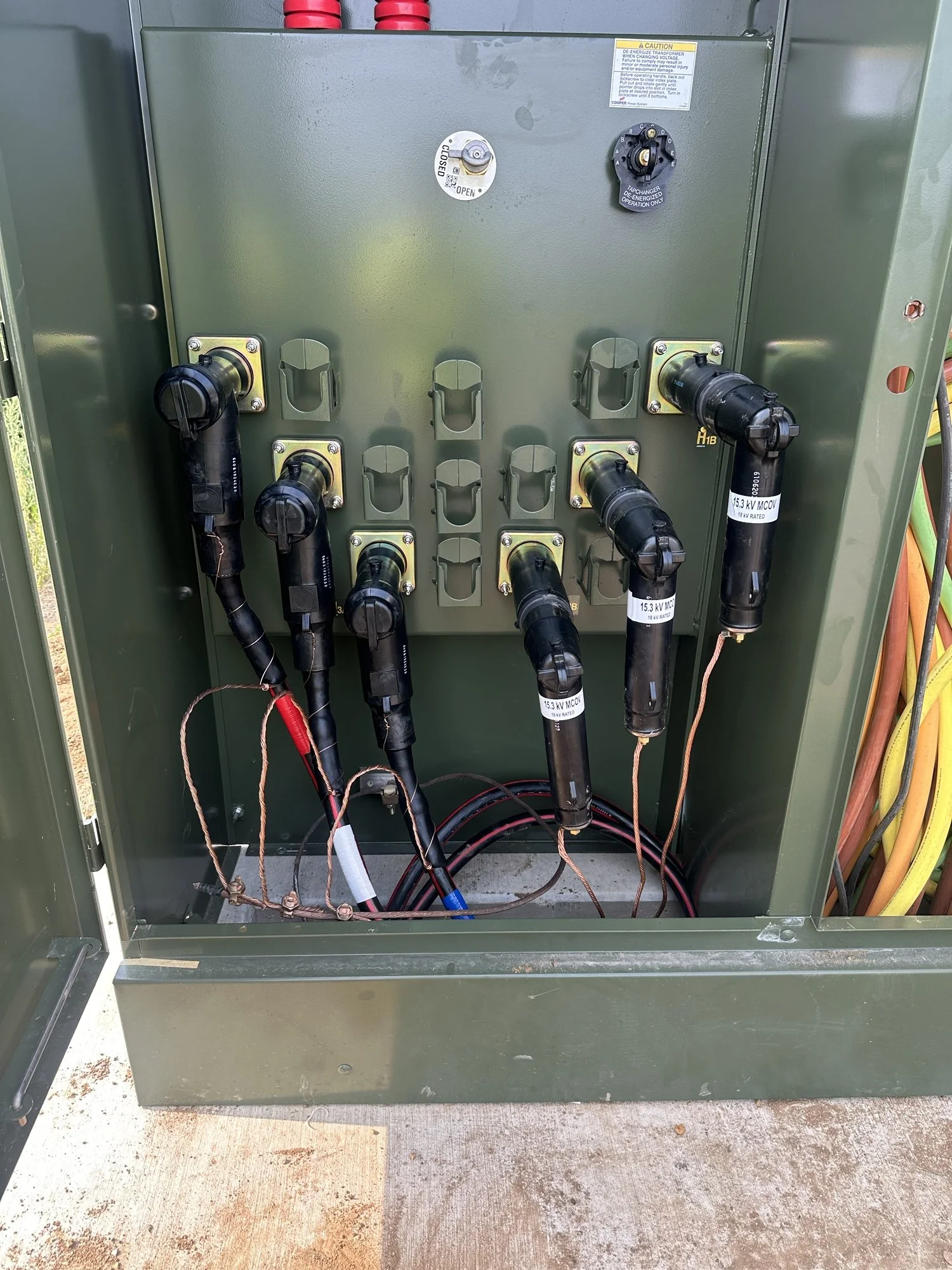
KE sourced all electrical materials, including conduit, tray, wire, and balance-of-system components for both solar and storage scopes. Where possible, assemblies were prefabricated and kitted offsite to shorten field time and improve installation quality.
Field Execution
The construction window was approximately six months, with multiple work streams running in parallel to meet the deadline.
Solar Scope
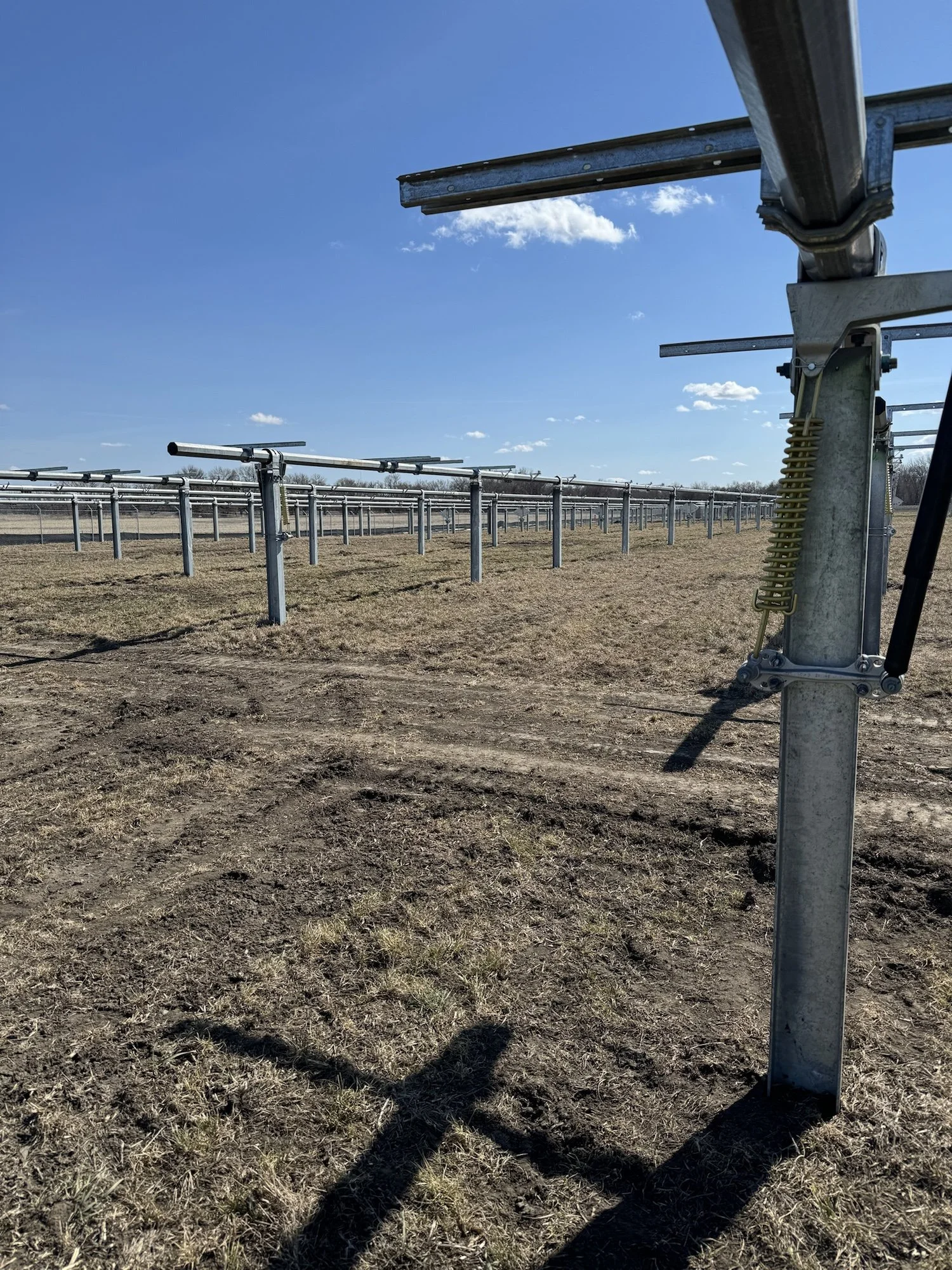
• Civil coordination for grading, access roads, and pile installation.
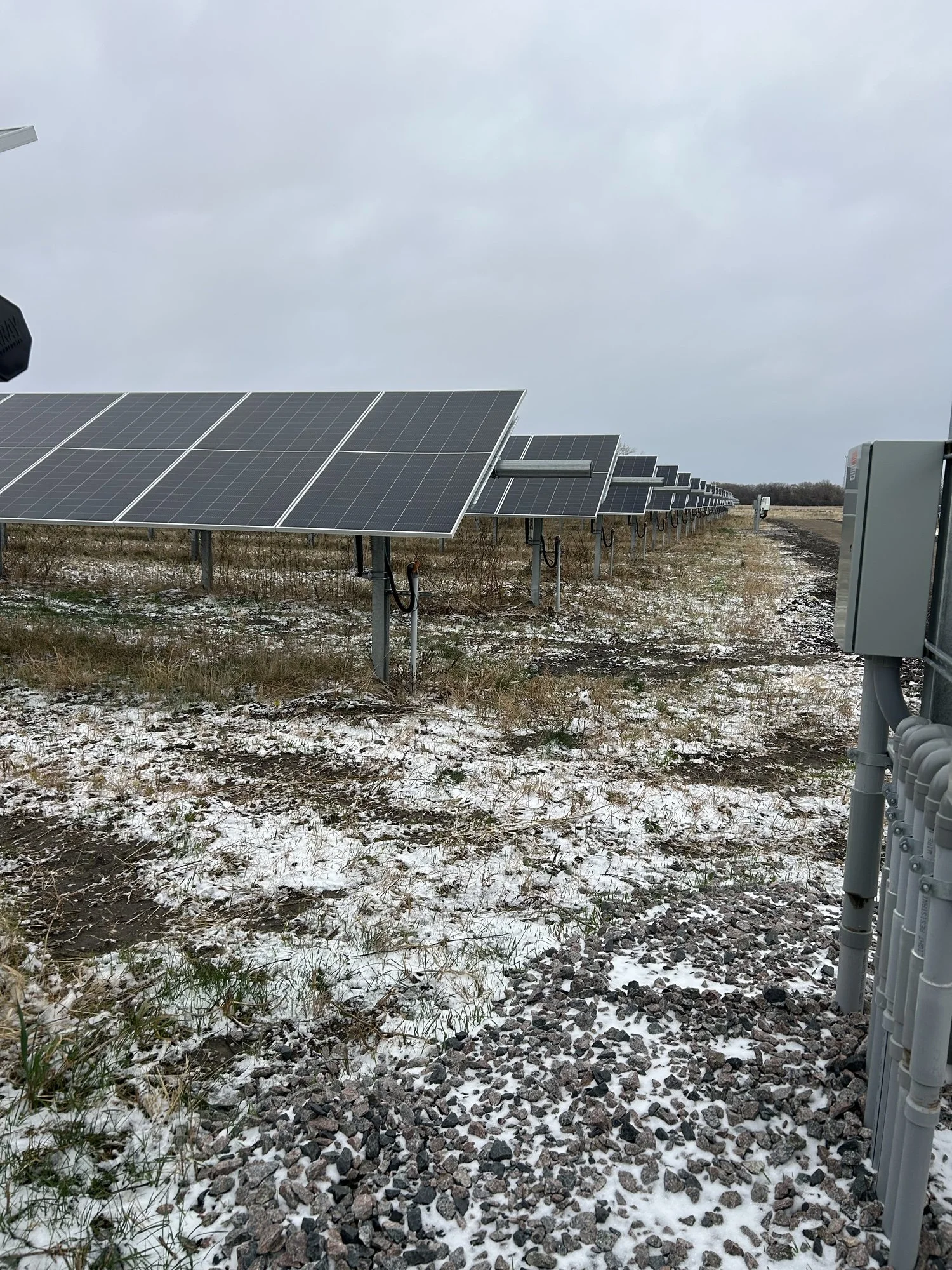
• Installation of racking systems and solar modules.
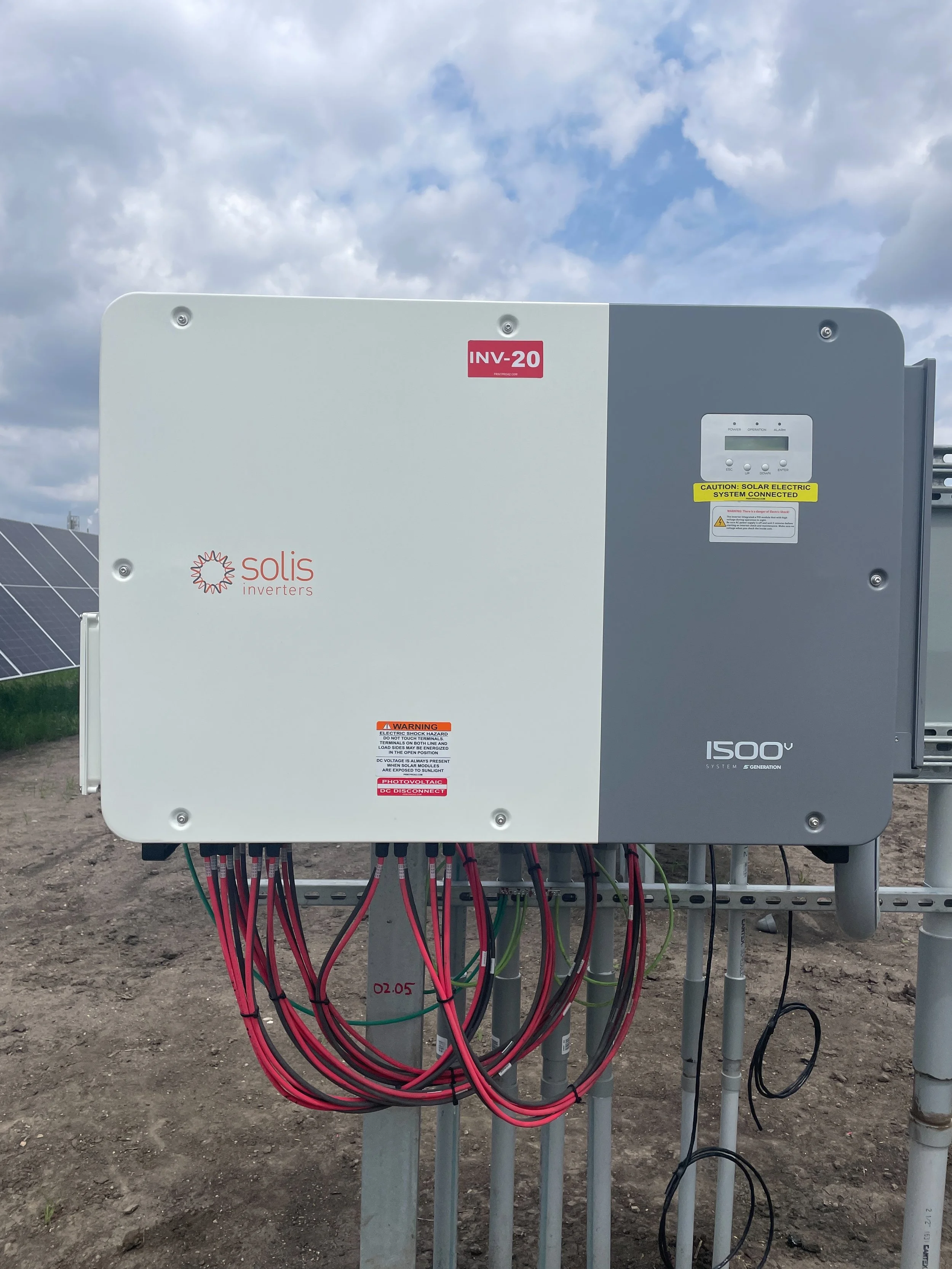
• Underground conduit and DC wiring from arrays to inverters.
• AC wiring from inverters to the interconnection point.
BESS Scope
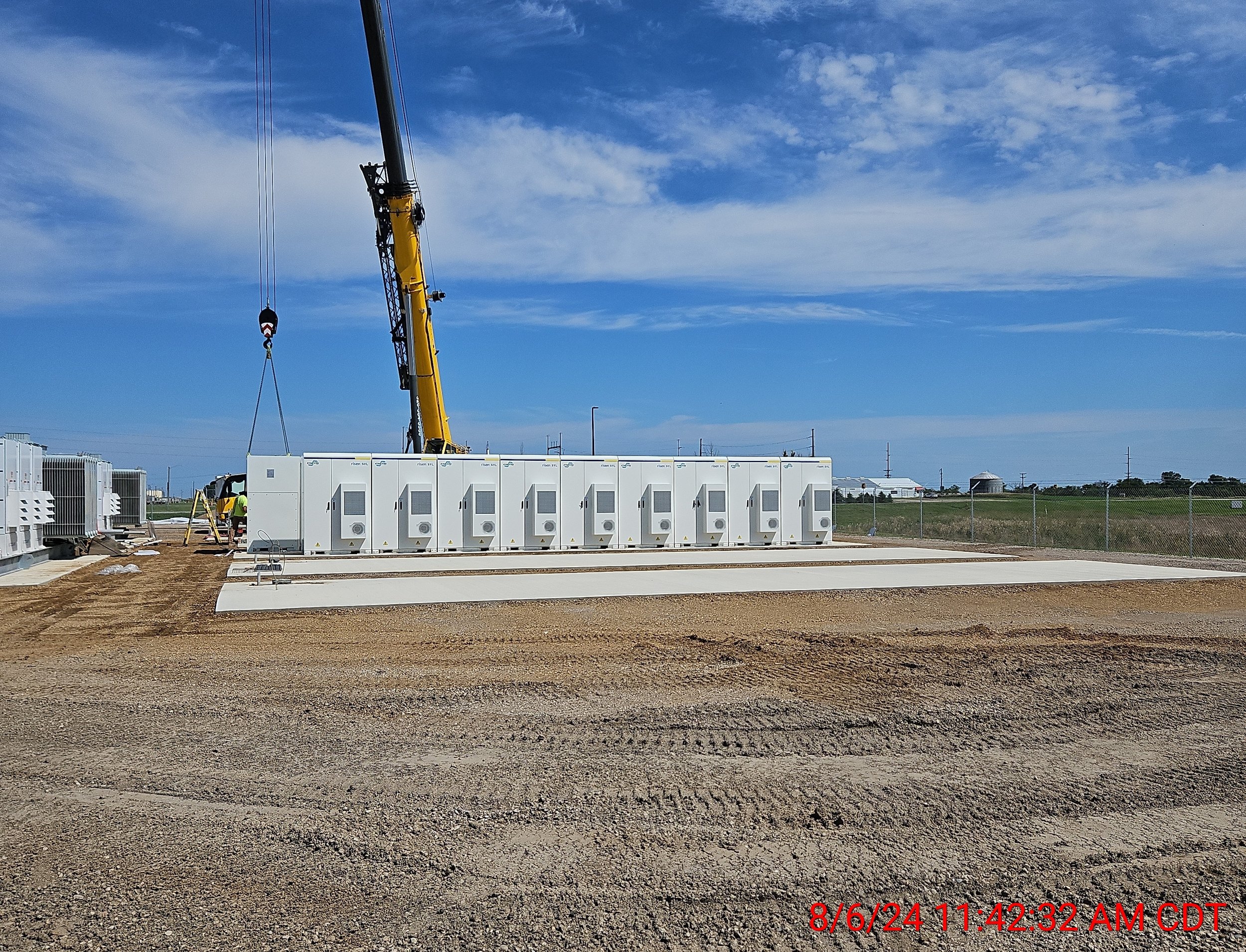
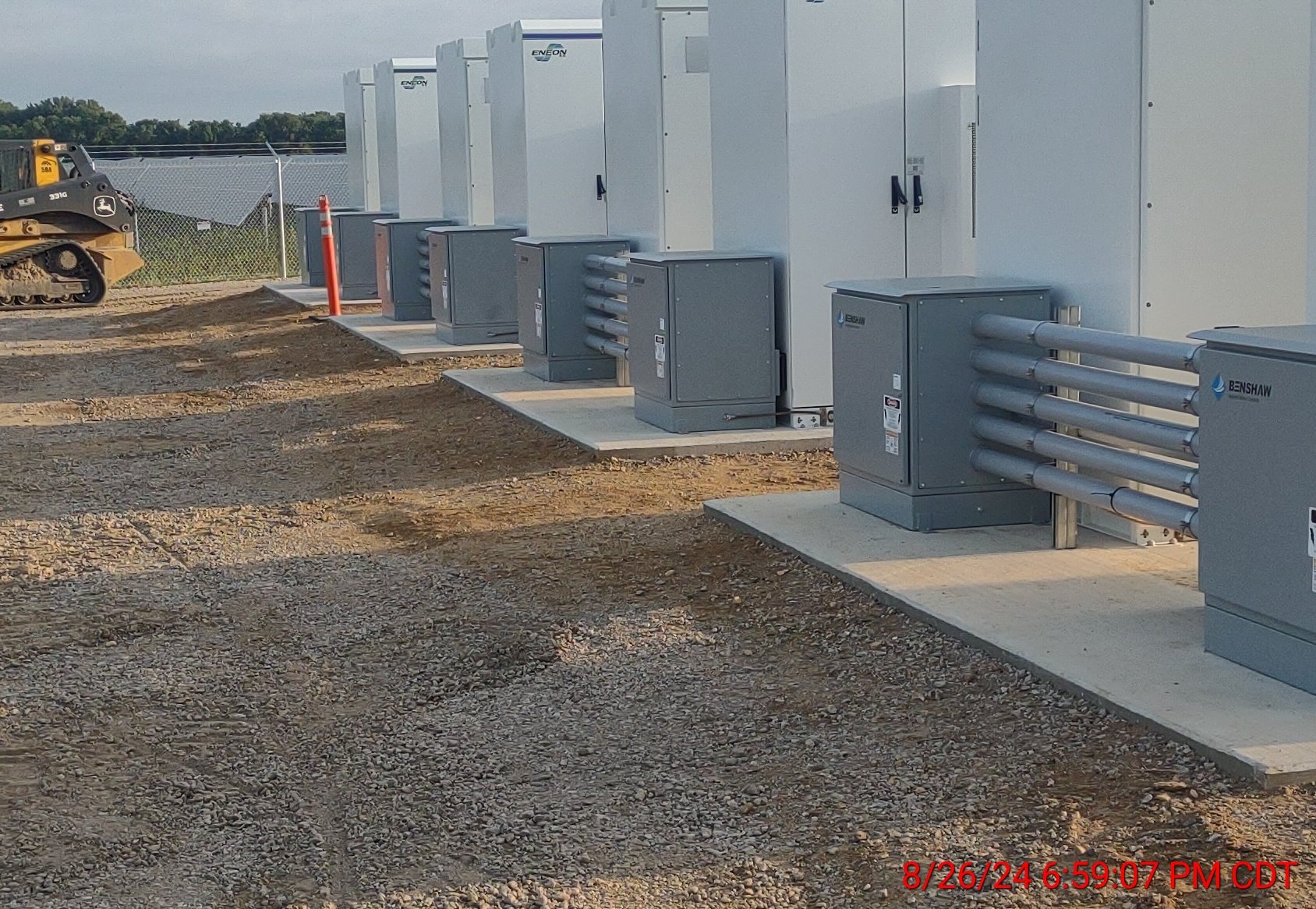
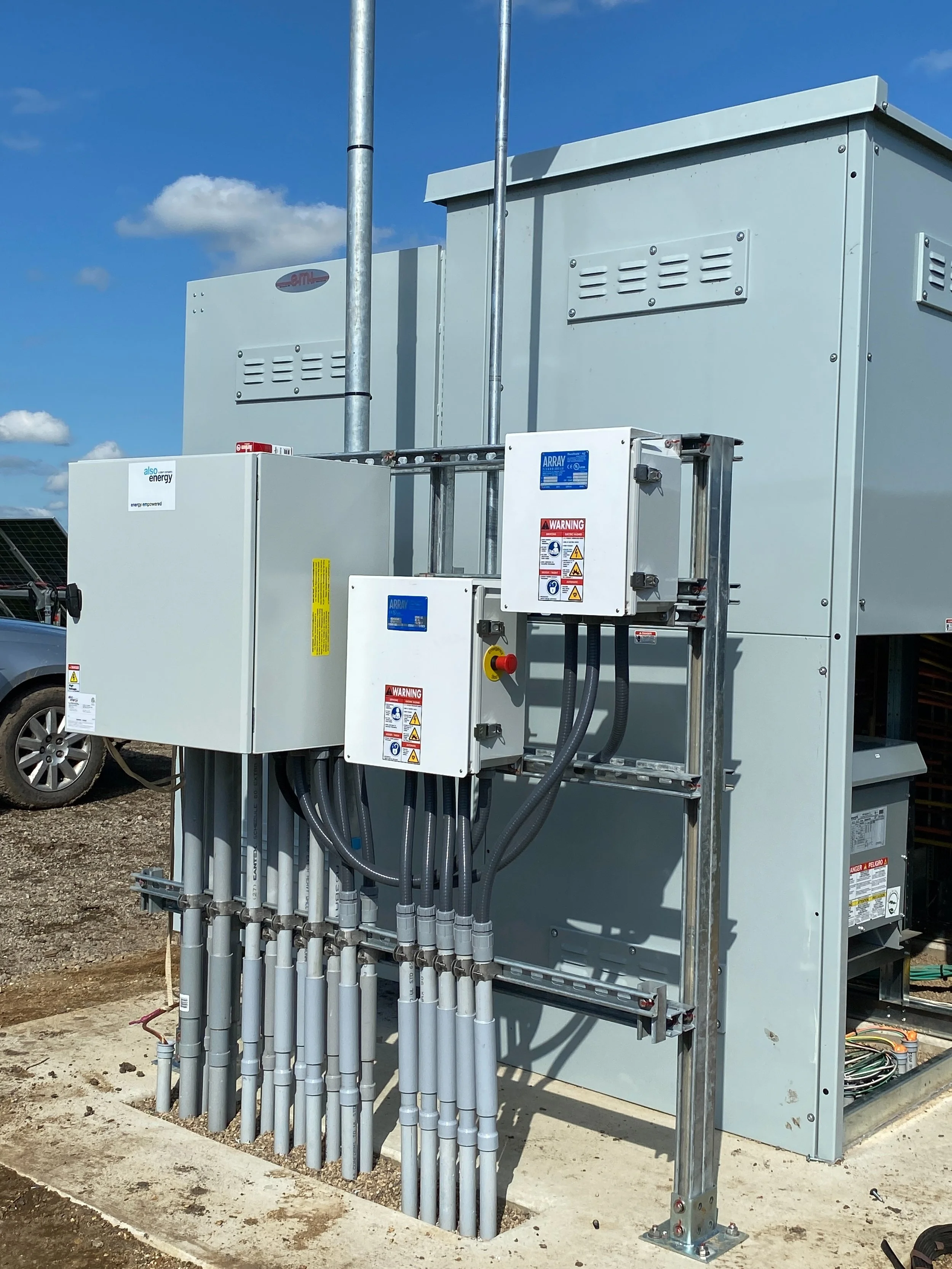
• Setting the BESS container and associated equipment.
• Integrating AC-coupled connections between the BESS and the solar plant.
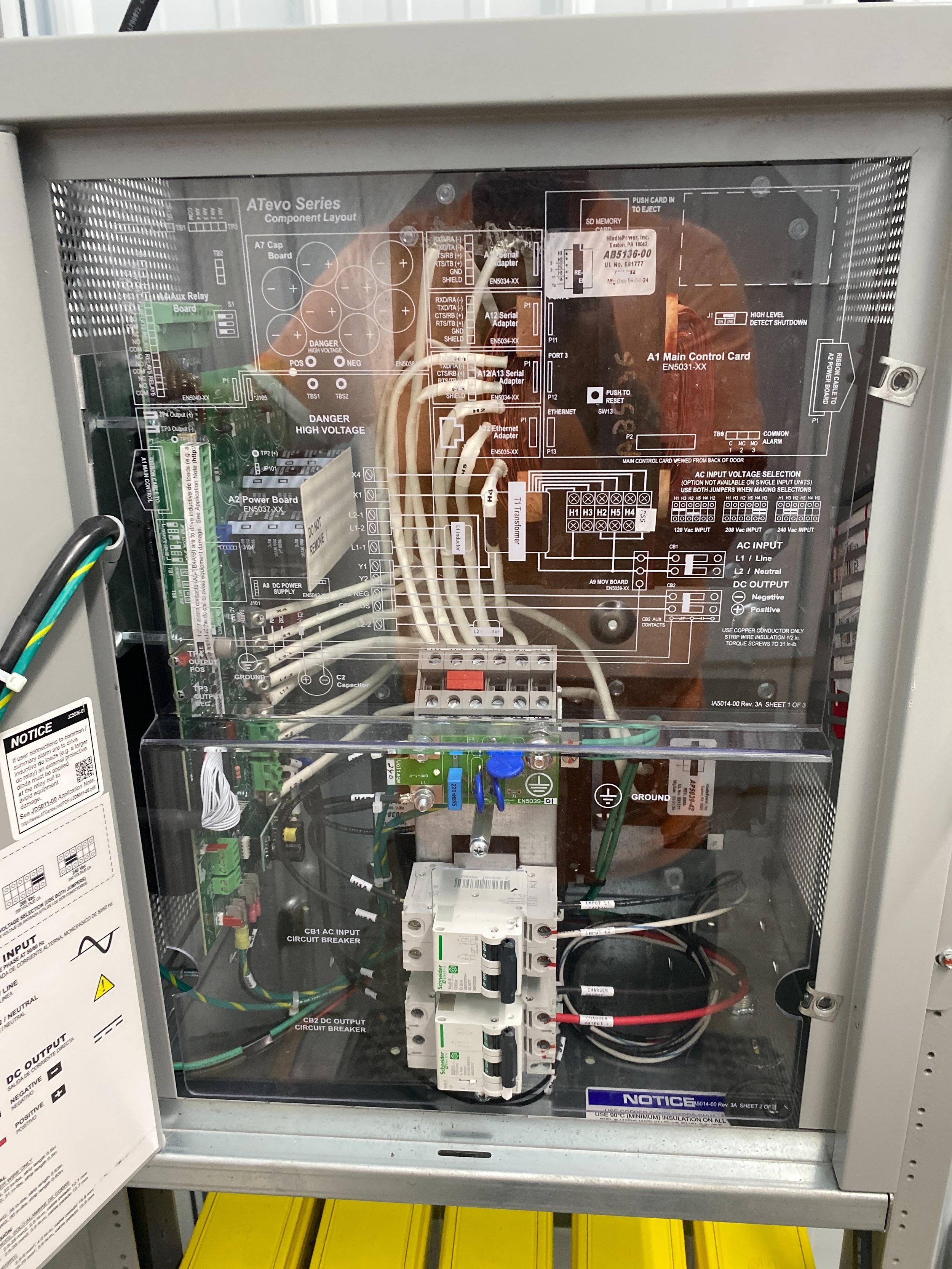
• Installing control and monitoring systems for seamless operation.
Daily coordination meetings kept all trades aligned. Field issues were escalated and resolved in real time to avoid schedule slips.
Commissioning and Integration
Commissioning required collaboration between KE, US Solar, Eneon, and MRES. Testing covered electrical performance, control system functionality, safety compliance, and system interoperability. KE’s commissioning team verified that both systems met operational specifications and handed over a complete, documented package to the owner.
Safety and Quality
KE enforced strict safety protocols for both electrical and civil work. Daily hazard assessments covered equipment movement, electrical hazards, and weather conditions. A dedicated QAQC lead verified installation quality against project standards, with all work inspected and documented before turnover.
Safety Innovation
KE continues to raise the standard for jobsite safety through the development and deployment of its in-house digital platform, Power Portal. This all-in-one system equips crews with real-time access to safety resources, including digital Job Safety Analyses (JSAs) that can be completed and submitted directly from the field. In addition, the platform’s integrated iTrack tool enables immediate incident reporting and tracking, allowing safety teams to respond quickly and identify trends across job sites. By digitizing these core processes, KE has seen an improvement in compliance and communication and empowering every team member to take ownership of safety.
Scheduling and Coordination
The integrated solar and BESS schedule was the controlling constraint. KE built the plan backward from the required energization date, defining deliverables for each phase. Coordination extended beyond KE crews to include civil contractors, Eneon, and utility representatives. Interface points were resolved in planning to prevent field delays.
Lessons Learned
The project demonstrated the value of a single-source EPC for complex renewable installations. Early engineering alignment between solar and storage systems reduced integration risks. Prefabrication and phased scheduling improved efficiency, and daily communication between stakeholders kept the project on track. The success of this first integrated project provides a roadmap for future solar + storage work.
Outcome
The Marshall project was completed on schedule, meeting all performance, safety, and quality targets. US Solar received:
• A fully operational utility-scale solar facility with integrated AC-coupled BESS.
• Verified performance through commissioning for both systems.
• A single EPC partner who managed the entire electrical scope with no handoffs.
• A documented, serviceable installation ready for long-term operation.
MRES expressed confidence in the project’s execution and performance, leading to additional work opportunities for US Solar and KE.
Sustainability and Market Impact
By combining renewable generation with energy storage, the Marshall facility provides MRES with more flexibility in managing supply, reducing reliance on fossil fuels, and supporting grid stability. The project advances US Solar’s mission to expand clean energy access while positioning both the owner and utility for future renewable integration.
Knobelsdorff’s cross-divisional approach and ability to self-perform complex scopes ensured a successful outcome—setting the standard for future solar + storage partnerships.